Latvia · Dish
Sklandrausis: rye, carrot and potato tart
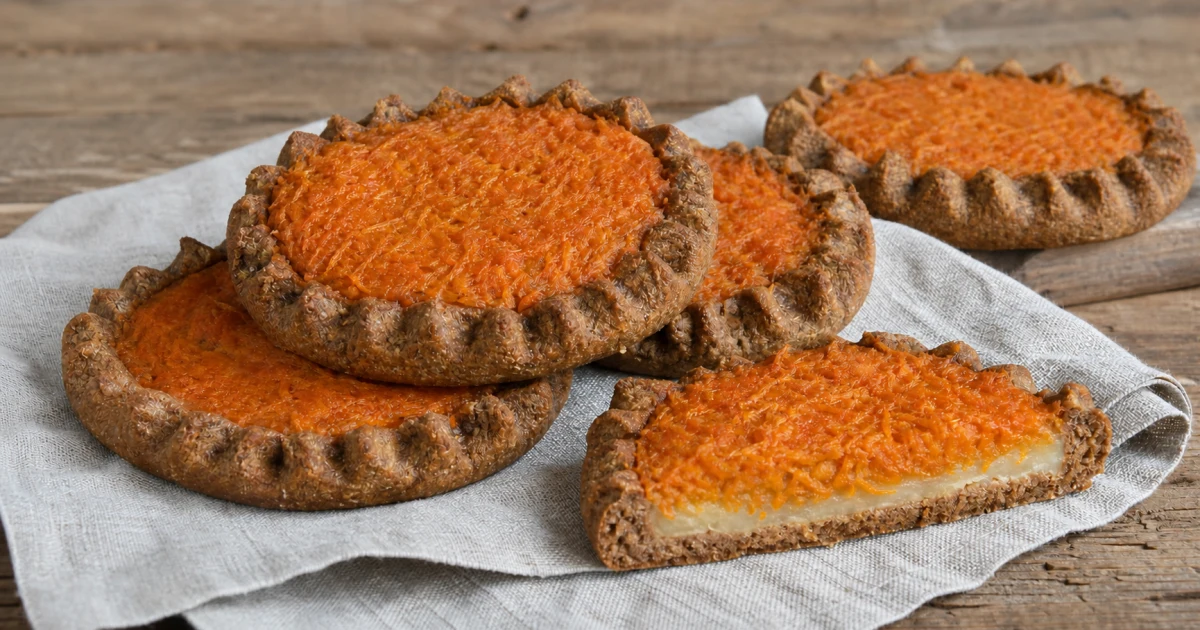
Sklandrausis is a small round tart with a firm unleavened rye base, a lower layer of potato and an upper layer of sweetened carrot. Traditionally associated with Kurzeme and Liv food culture, it is one of Latvia’s most distinctive regional foods.
- Dish type
- Small sweet-savoury rye tart
- Key ingredients
- Rye flour, potato, carrot
- Strongest association
- Kurzeme and Liv food heritage
- EU status
- Traditional Speciality Guaranteed
This guide is independently written and checked against official EU, Latvian food-quality and tourism information.
What sklandrausis is
The EU product specification describes a round tart with upturned edges made from firm rye-flour dough. Boiled potato filling is placed on the base and carrot filling above it, producing the characteristic orange top and a clear contrast between bread-like crust and sweeter vegetable filling.
Sour cream, sugar, egg, cinnamon or caraway may appear in the topping or seasoning within the documented specification. The variations change the sweetness without removing the basic rye, potato and carrot structure.
Kurzeme and Liv associations
Latvia’s national tourism authority presents sklandrausis as a traditional Liv dish adopted into the cuisine of Kurzeme. It is therefore more useful to seek it in western Latvia than to treat it as an everyday pastry found uniformly across the country.
The regional story is part of the value of the dish. Producer visits, heritage events and food workshops can provide more context than a pastry eaten without explanation.
What the protected name means
Sklandrausis is registered under the EU Traditional Speciality Guaranteed scheme. TSG protects a traditional composition or method; it is not the same as a Protected Geographical Indication that restricts production to one place.
The registration is useful to travellers because it gives the name a documented product specification. It does not mean that every carrot tart or every rye pastry is sklandrausis.
Taste and serving style
The carrot layer dominates visually and usually gives a sweet or gently sweet taste, while the rye base remains firm and bread-like. Potato makes the filling denser without turning the tart into a savoury potato pie.
Official Latvian sources describe sklandrausis as commonly eaten cold with tea or milk. A bakery or restaurant may serve a contemporary presentation, so ask if you want the protected traditional version.
Where to try sklandrausis
Kurzeme is the strongest route context, especially around its coastal and Liv heritage areas. Food events, home producers and bakeries may require advance contact rather than operating as walk-in attractions every day.
The tart contains rye gluten and commonly includes dairy; some documented coatings also use egg. Confirm the exact version with the producer.
Check the primary information
Official sources and review information
This guide was last reviewed on 23 July 2026. The sources below provide the official product specification, food-quality context and tourism background for Kurzeme and Liv food heritage.
EUR-Lex: Sklandrausis product specification
EU Traditional Speciality Guaranteed specification for the dough, layered filling and character of sklandrausis.
Ministry of Agriculture: Food quality schemes
Official Latvian explanation of protected traditional foods including sklandrausis and rye bread.
Latvia.travel: A journey of taste in Kurzeme
Official regional explanation of sklandrausis and western Latvian food traditions.
Latvia.travel: West Latvia (Kurzeme)
Official visitor context for sklandrausis and bukstiņputra in Kurzeme.
Continue exploring